

Many of us go about our daily lives surrounded by technologies that we don’t completely understand like microwaves, televisions, and the internal combustion engine. However, there’s one technology that most of us use every day that is so extraordinary and mystical, I would even be tempted to call it magic…that’s right, it’s wi-fi! But what if I told you, it wasn’t magic? You would probably respond, “well, duh!” That’s an understandable response to my silly question, but what if I told you, the foundational technology on which wi-fi is based has been around for over a century?
Let’s start with some fundamental science
To figure out how wi-fi actually works, we must begin with some basic science. Specifically, we need to talk about electromagnetic radiation. Pretty much everything that we see and interact with in the world emits electromagnetic radiation in the form of waves; even you emit electromagnetic radiation! Don’t worry, most radiation is NOT the kind you see in stories about nuclear meltdowns, so you’re safe!
Why does everything emit electromagnetic waves? The answer lies at the subatomic level. Everything is comprised of atoms, which consist of protons, neutrons, and electrons (also referred to as subatomic particles). These particles have electric and magnetic fields around them, and these fields are essentially linked to one another and are constantly interacting with each other (which is why we typically combine them and just say electromagnetic field). As the particles move around, which they are constantly doing, the electric and magnetic fields change each other—the electric field will move and create a magnetic field, which will also move and create an electric field, and so on and so forth. This cycle of oscillating fields generates a wave of energy that we call an electromagnetic wave.
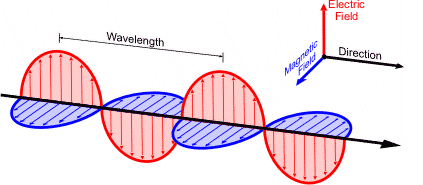
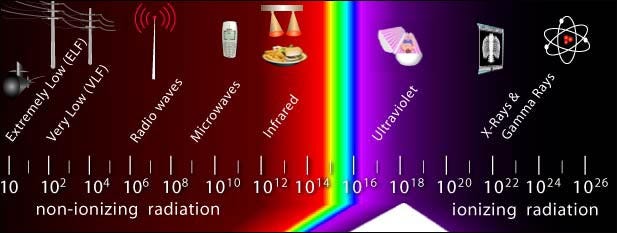
There is an entire spectrum of electromagnetic waves with varying frequencies (basically how many times the wave oscillates per second) and wavelengths (distance between the peaks of two waves). A small sliver of this spectrum contains waves we can actually see as visible light. Ya know, like the colors of the rainbow! Unfortunately, our eyes are not tuned to detect all types of waves on the spectrum. Although, if they were, that could be quite overwhelming with different types of waves flying around all the time.
Adapting old technology for the modern world
Alright, we’ve survived the science lecture, so let’s get back to the topic at hand: wi-fi. The origins of wi-fi technology can actually be traced back to the early 20th century, which is when radio technology got its start. Radios communicate the sounds of music, talk shows, and sports games by emitting and receiving electromagnetic waves at specific frequencies. Which frequency of the electromagnetic spectrum is used by radios? Surprise surprise, it’s radio waves!
While radio technology of the early to mid-20th century was limited in the type of information it could send and receive (primarily sounds), scientists started wondering how they could use radio waves to send and receive more complex types of information. This effort became especially important with the invention and widespread use of personal computers, which relied on ethernet cables to send information to each other.
Finally, in 1997, scientists developed and released the first version of wi-fi, or as it was known then: 802.11 protocol (quite the catchy name). This new technology, which was first implemented into consumer products by Apple Inc., gave computers the ability to send and receive information without being physically connected to a router.
So how exactly does it work?
While computers communicate and operate using a variety of coding languages, the fundamental code upon which all these languages are based is called binary. Binary code is just 1s and 0s. For example:
01101000 01100101 01101100 01101100 01101111
That’s binary code for “hello”!
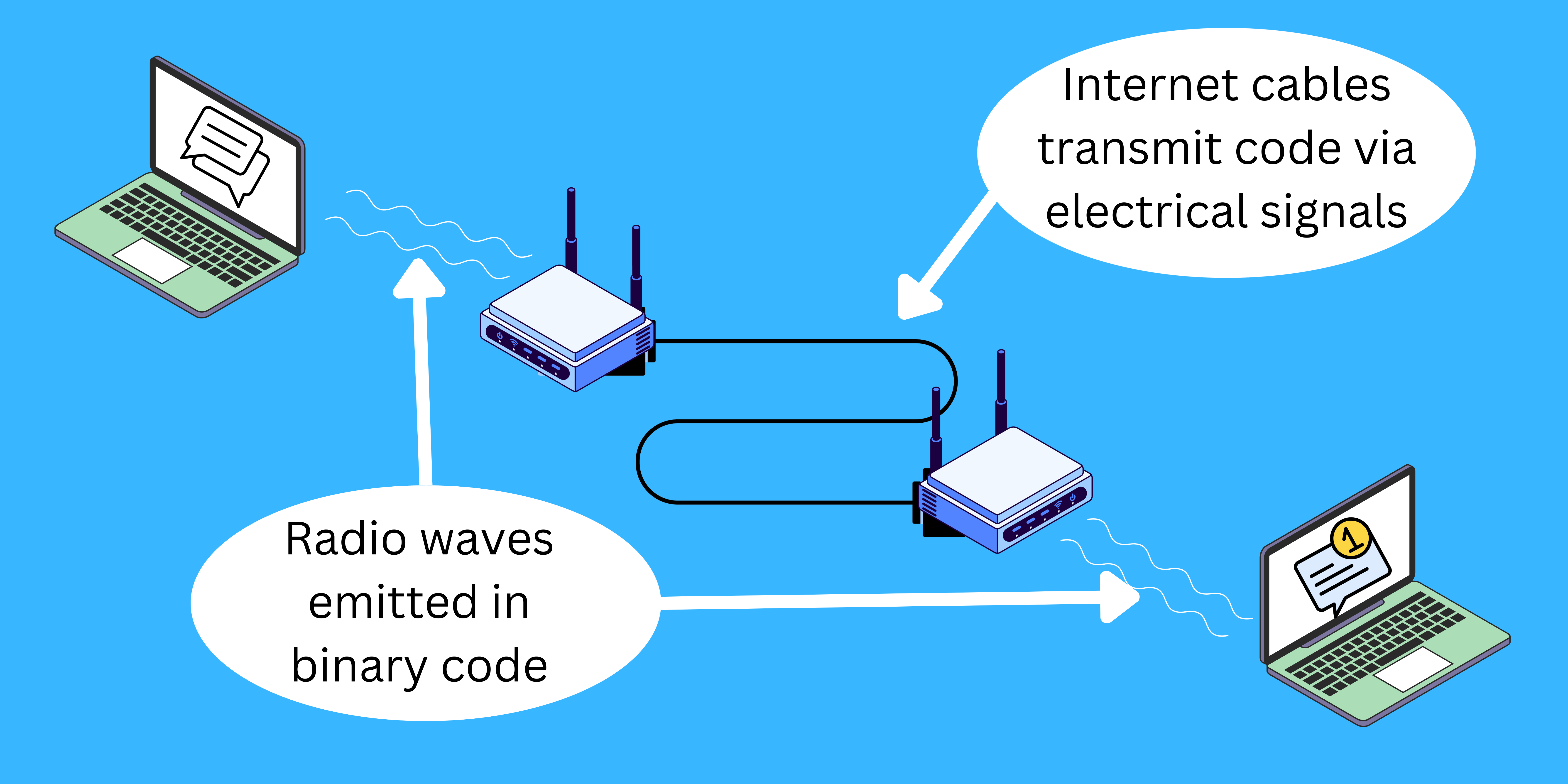
All information on a computer, whether it’s a song, a video, a picture, or a blog, can be broken down into binary code. So, when you use wi-fi to send a message to your friend in another city, your computer translates the message into binary code and emits radio waves that match the code. The waves are received by the router and sent to their intended recipient via internet cables, which use electrical signals to transmit the code along the wires. Once they reach your friend’s wi-fi router, they are once again emitted as radio waves in the form of binary code. Your friend’s computer receives the waves and translates the binary code into the original message—kind of like putting a puzzle together.
You might be wondering how computers do all the steps in this process so quickly. Well, the beauty of electromagnetic waves is that they travel at the speed of light, which is approximately 186,000 miles per second. That means that these waves could travel around the earth almost 7.5 times in a single second. Not only are radio waves super fast, but the ones used in wi-fi technology are either 2.4 or 5 gigahertz. That means that the radio wave frequency is either 2.4 or 5 billion waves per second, which allows the wi-fi to communicate an immense number of 1s and 0s in the blink of an eye. Amazing, right?!
Want to learn more about electromagnetic waves or wi-fi technology?
While I have done my best to demystify wi-fi for you in just a few minutes, there is still more you can learn about complex technologies and subatomic processes that make it all possible. Here’s a couple useful videos I found to get you started:
Always wondered how wi-fi worked. Thanks for the lesson 🙂